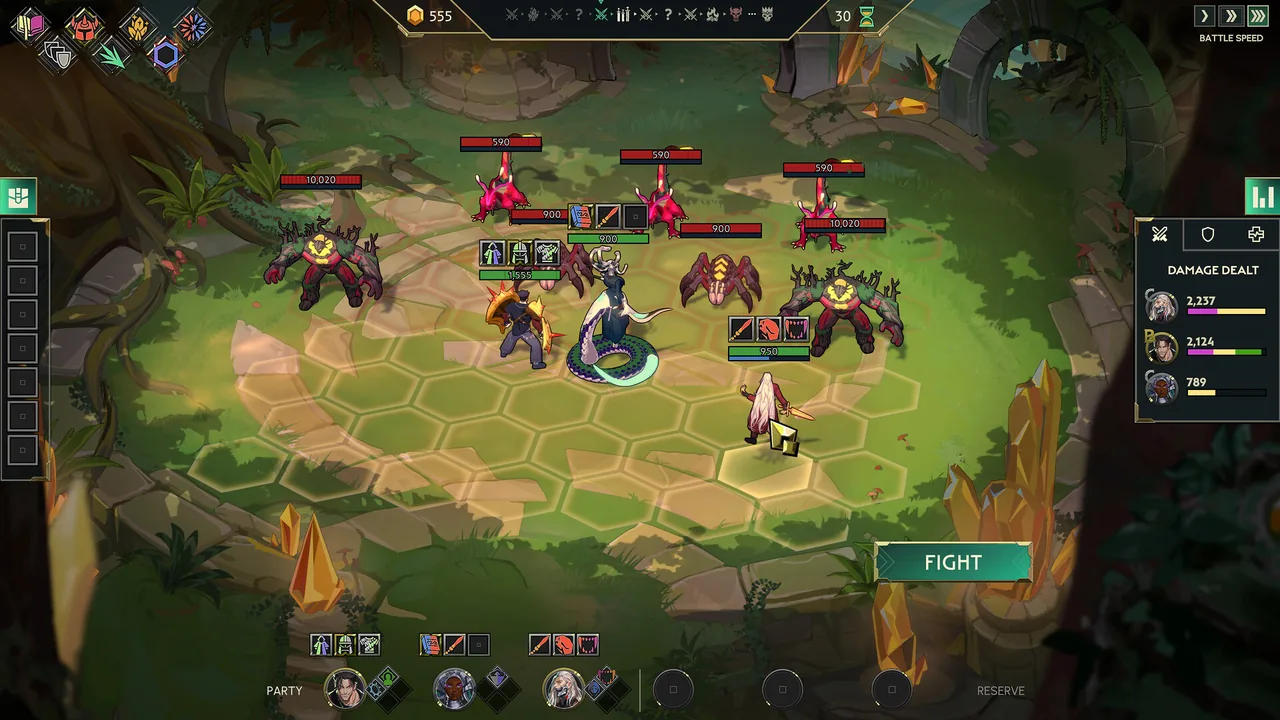
Guildrun is a PvE autobattler roguelike where you draft Heroes, place them on your side of the battlefield, equip items, and gather relics that affect your whole team to seal rifts at your own pace. Each run opens by picking a starting Hero, then cycles through fights, Shop visits, and path choices toward a Boss fight at the end of each Act.
Board, hex layout, and reserves
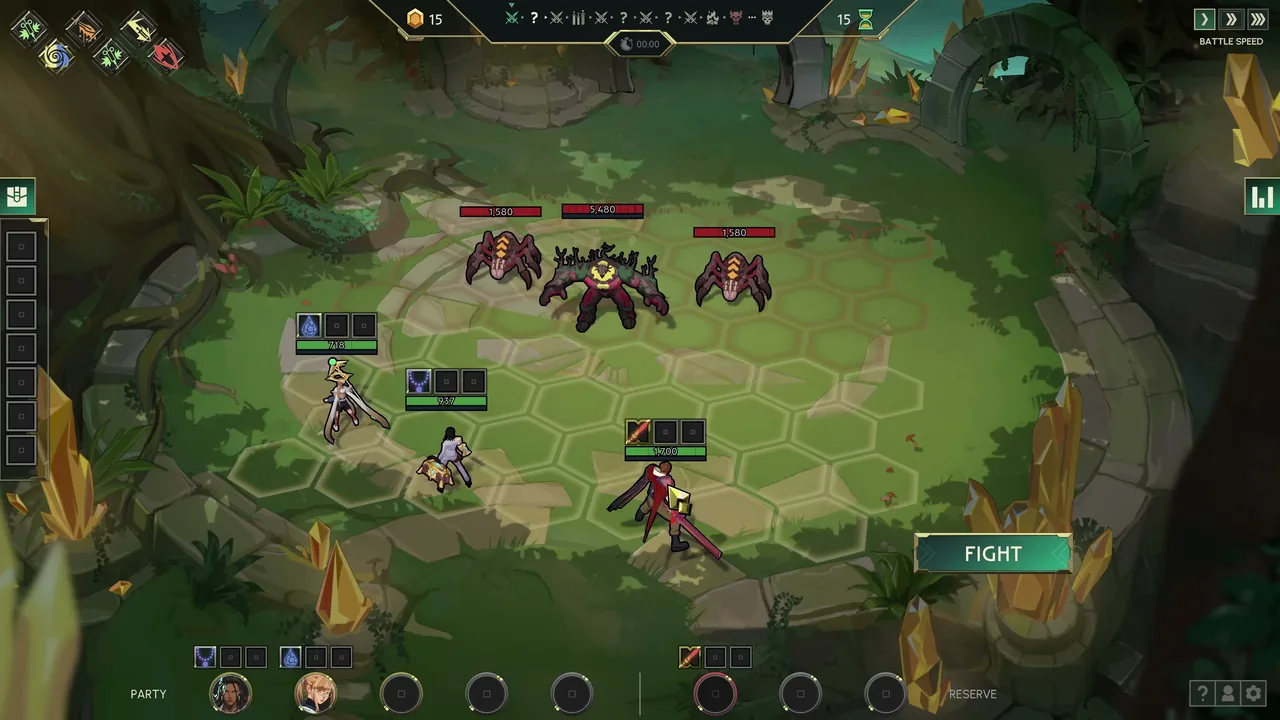
Combat in Guildrun runs automatically: Heroes attack on their own and trigger their Active Ability at full Mana. You can place heroes anywhere on your half of the battlefield before combat begins.
Stage data defines the battlefield grid as 7 hexes wide by 8 hexes tall. You can test placements and check class or guild counts ahead of a run on the team builder.
Your active Battlefield limit starts at 3 Heroes and can increase up to 5 via team-size relics such as  Harmony Crystal, while your total roster across the Battlefield and reserve caps at 6 Heroes. Extra Heroes wait in the reserve, and dragging Heroes between the Battlefield and Reserves lets you swap who fights.
Two keywords control whether abilities activate from the reserve:
 Backup: abilities carrying this tag trigger both while the hero is fighting on the board and while they sit in the reserve.
- backuponly: effects marked with this tag activate exclusively while the hero remains in the reserve.
Read the dedicated backup versus backup-only guide for a full breakdown of reserve triggers and which heroes use them.
Core Run and Board Summary
| System | Value | Notes |
|---|---|---|
| Battle grid | 7 wide by 8 tall | Player side of the battlefield |
| Starting board limit | 3 active heroes | Maximum of 6 total heroes |
Starting  Shard | 15 | Given at run start |
| Surviving hero bonus | 2 Shard | Per surviving hero after combat |
| Interest rate | 1 per 5 saved | Capped at 20 per combat |
| Act nodes in demo | Floors 0 through 11 | Mini-Boss at 5, Dragon at 11 |
Shop mechanics, rerolls, and rarity odds
After each fight, you visit the Shop to buy Heroes, items, and relics, or sell Heroes and items for Shards. You can freeze the Shop to lock its current offerings in place until your next visit.
A standard Shop presents 3 hero choices, 2 item choices, and 1 relic choice per visit. Rerolling the regular Shop starts at 1 Shard and increases by 1 Shard with each reroll.
After every Boss, the Auction House opens with more offerings and higher-rarity choices. The Auction House starts at a base reroll cost of 7 Shards (still rising by 1 per reroll) and displays 3 hero choices, 4 item choices, and 3 relic choices, including 1 fixed Epic item, 1 fixed Legendary relic, and 1 fixed LegendaryQuest relic (data file enum name, with no separate in-game subtitle).
Shop Costs and Resale Values
| Offering | Cost | Resale |
|---|---|---|
| Rank C Hero | 15 | 0.66 multiplier |
| Rank B Hero | 25 | 0.66 multiplier |
| Rank A Hero | 35 | 0.66 multiplier |
| Rank S Hero | 45 | 0.66 multiplier |
| Common Item | 5 | 0.66 multiplier |
| Rare Item | 15 | 0.66 multiplier |
| Epic Item | 25 | 0.66 multiplier |
| Unique Item | 5 | 0.66 fallback multiplier |
| Common Relic | 10 | — |
| Rare Relic | 20 | — |
| Epic Relic | 30 | — |
| Legendary Relic | 40 | — |
| Harmony Crystal | 40 | Team-size relic |
Regular items sell at a 0.66 multiplier (such as 16 Shards for an Epic item), whereas  Rift Seal is unsellable during the Rift Sealing Protocol.
Shop Odds by Chunk
Shop offering odds split into two chunks (chunk 0 and chunk 1), with per-floor chance increases listed for higher ranks and rarities alongside Auction House odds.
| Pool | Base odds (chunk one) | Base odds (chunk two) | Auction House |
|---|---|---|---|
| Hero Rank C | 85% | 45% | 30% / 15% |
| Hero Rank B | 0% (+10% per floor) | 50% | 50% / 40% |
| Hero Rank A | -10% (+2.5% per floor) | 5% | 20% / 40% |
| Hero Rank S | 0% | -10% (+2.5% per floor) | 0% / 5% |
| Common Item | 66% | 33% | 30% / 10% |
| Rare Item | 33% | 66% | 50% / 60% |
| Epic Item | -10% (+5% per floor) | 1% (+10% per floor) | 20% / 30% |
| Common Relic | 66% | 33% | 30% / 10% |
| Rare Relic | 33% | 66% | 50% / 60% |
| Epic Relic | -5% (+5% per floor) | 1% (+10% per floor) | 20% / 30% |
For floor-by-floor odds calculations and when to freeze or reroll, see the shop mechanics guide.
Shards, interest, and Emergency Rewind
Shard are Guildrun's run currency, starting at 15 Shards when you begin a run. Combat victories grant Shards, including a Surviving Hero Bonus of 2 Shards for each Hero alive at the end of combat.
Interest rewards saving currency between shops. At the end of each combat, you earn 1 additional Shard for every 5 Shards in your bank, up to a cap of 20 bonus Shards per combat, and interest does not count as Shard generation for effects keyed to generating Shards.
shardstabilizer acts as your single extra life during a run. Losing a combat while it is available prevents defeat and grants all accumulated Shards, after which another loss while Emergency Rewind is unavailable ends the run.
In the player constants, Emergency Rewind starts with 10 accumulated Shards and adds 10 Shards per fight won. Patch 0.5.2 notes that recharging it starts at 10 Shards, though the static localization tooltip still reads 5 Shards per combat victory. Upon reaching the final boss, the protection deactivates automatically and grants you its stored Shards, and more economy details live in the shards and interest guide.
Heroes, seven classes, six guilds, and ranks
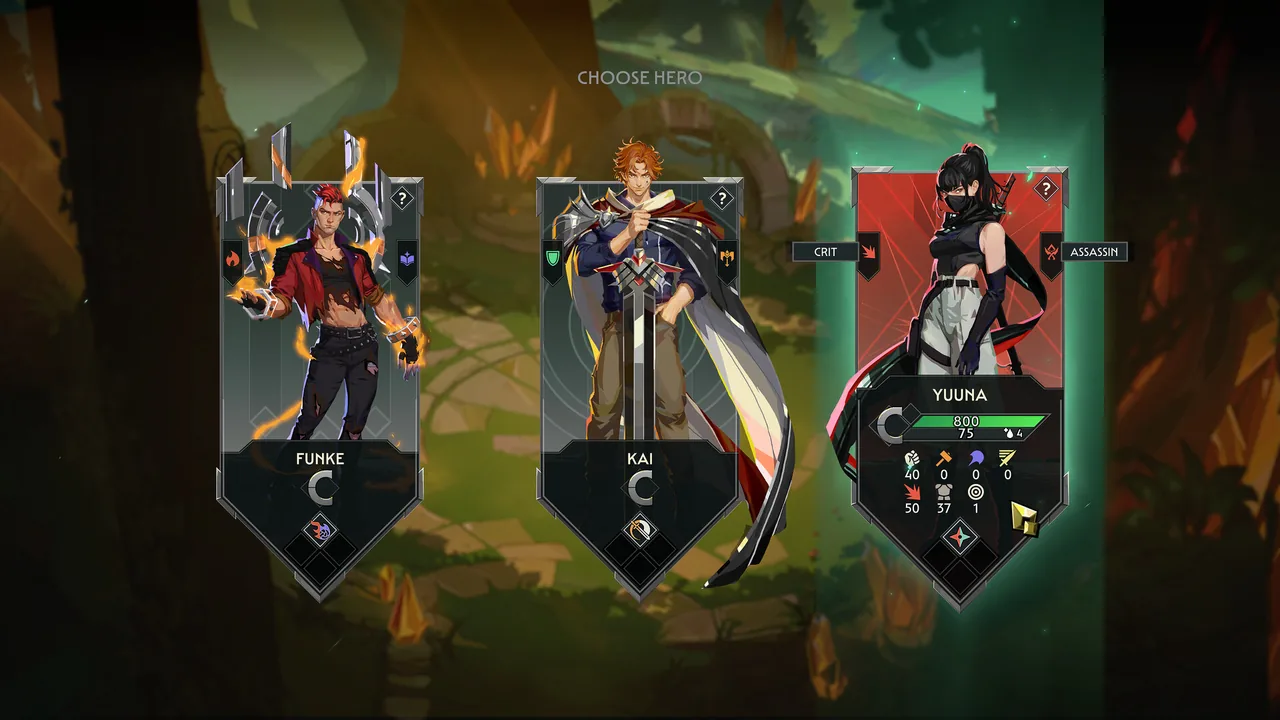
The demo roster includes 25 heroes divided across 7 classes and 6 guilds, all browsable in the heroes database. Every hero belongs to one of the 6 guilds listed in the guilds hub:  Frontline,
 The Hunt,
 L'Héritage,
 A Temple,
 Gaia Project, and
 Aegis Global.
Each of the 7 classes in the classes database uses a distinct primary stat that scales its abilities more strongly alongside three secondary stats. Most heroes start with a single class, though three demo heroes begin with two classes:  Zuri (Tank and Assassin),
 Rowan (Vanguard and Tank), and
 Tilly (Warrior and Duelist).
| Class | Primary stat | Secondary stats | Core mechanics |
|---|---|---|---|
 Warrior | Attack | Crit, Max HP, Attack Speed | Crit, Rush, Shields |
 Tank | Defense | Max HP, Magic, Mana Regen | Stall, Poison, Frost |
 Vanguard | Max HP | Defense, Attack Speed, Attack | Rush, Shields, Burn |
 Assassin | Crit | Attack, Magic, Defense | Crit, Shards, Poison, Rush, Stealth |
 Duelist | Attack Speed | Crit, Attack, Max HP | Stall, Rush, Debuffs, Crit, Shards |
 Mystic | Mana Regen | Magic, Attack Speed, Defense | Shields, Shards, Debuffs, Stall |
 Mage | Magic | Mana Regen, Crit, Max HP | Stall, Burn, Frost |
Purchasing a duplicate copy of a hero you already own increases their rank from C up through B, A, and S (the maximum hero rank of 4). Every rank increase raises the hero's base stats and unlocks a major upgrade step:
- Rank B: unlocks your choice of a hero-specific B-Rank Specialization from 3 options per hero.
- Rank A and Rank S: offers Class Upgrades drawn from your hero's class pools rather than hero-unique upgrades.
- Base item slots: Heroes start with a base equipment limit of 3 slots and have a maximum cap of 6 item slots.
- S Rank bonus slot: reaching S Rank grants every hero an additional item slot.
Check our hero ranking guide for full stat scaling tables and our item slots per rank guide for slot-modifier interactions.
Items and relics
Items across Common, Rare, Epic, and Unique rarities appear in the items database. You equip items by dragging them onto individual heroes, and you can unequip items freely at any time or recover them automatically if you sell the hero holding them.
Relics affect your whole team, with no limit on how many Relics you can carry. The 300+ relics in the relics database include Common, Rare, Epic, Legendary, and Unique rarities alongside quest relics and team-size relics.
Quest items and quest relics list a quest requirement alongside their reward:
- Quest items: items such as
 Toxic Ring (inflict 25 Poison to gain 10 Shards) or hero-specific
 Zeus's Thunder (250 attacks while held by
 Irini) grant rewards upon completion.
- Quest relics: quest mandates such as
 Slaughter Mandate or
 Merchant Mandate reward an extra active team slot (up to 5) once you clear thresholds like auto-attack damage or shop rerolls.
- Team-size trade-offs: unique relics like
 Quantity over Quality add a team slot while removing 1 item slot per hero, whereas
 Quality over Quantity grants 2 extra item slots at the cost of 1 team size.
Events, Crossroads, and act structure
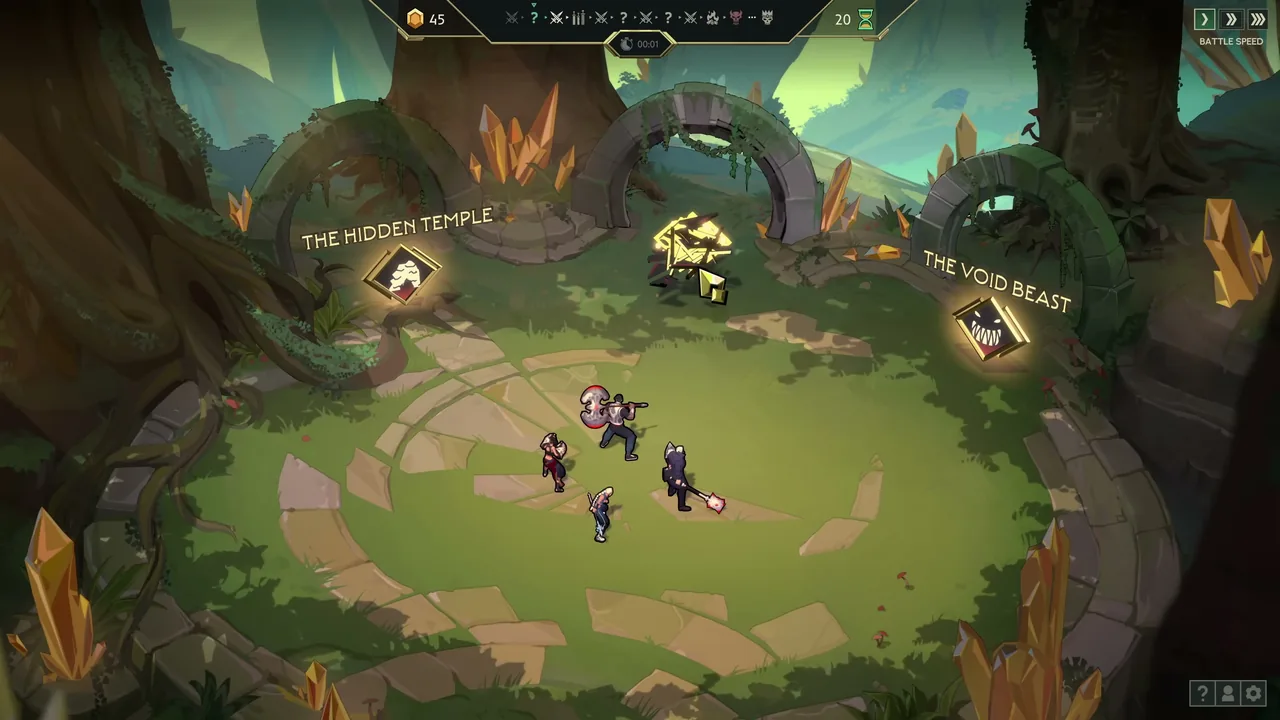
Upon leaving the Shop, you pick your next path toward encounters listed in the events database. Paths can offer unique events, random events, trial combats, or a challenge modifier for the next combat to earn extra rewards.
In the demo, a run progresses from Floor 0 through Floor 11 across two act chunks, with a 3-act structure planned for the full release per Patch 0.5.14. You can inspect every node, enemy pool, and stage layout in the rift sequence overview.
- Floor 0: opens with the
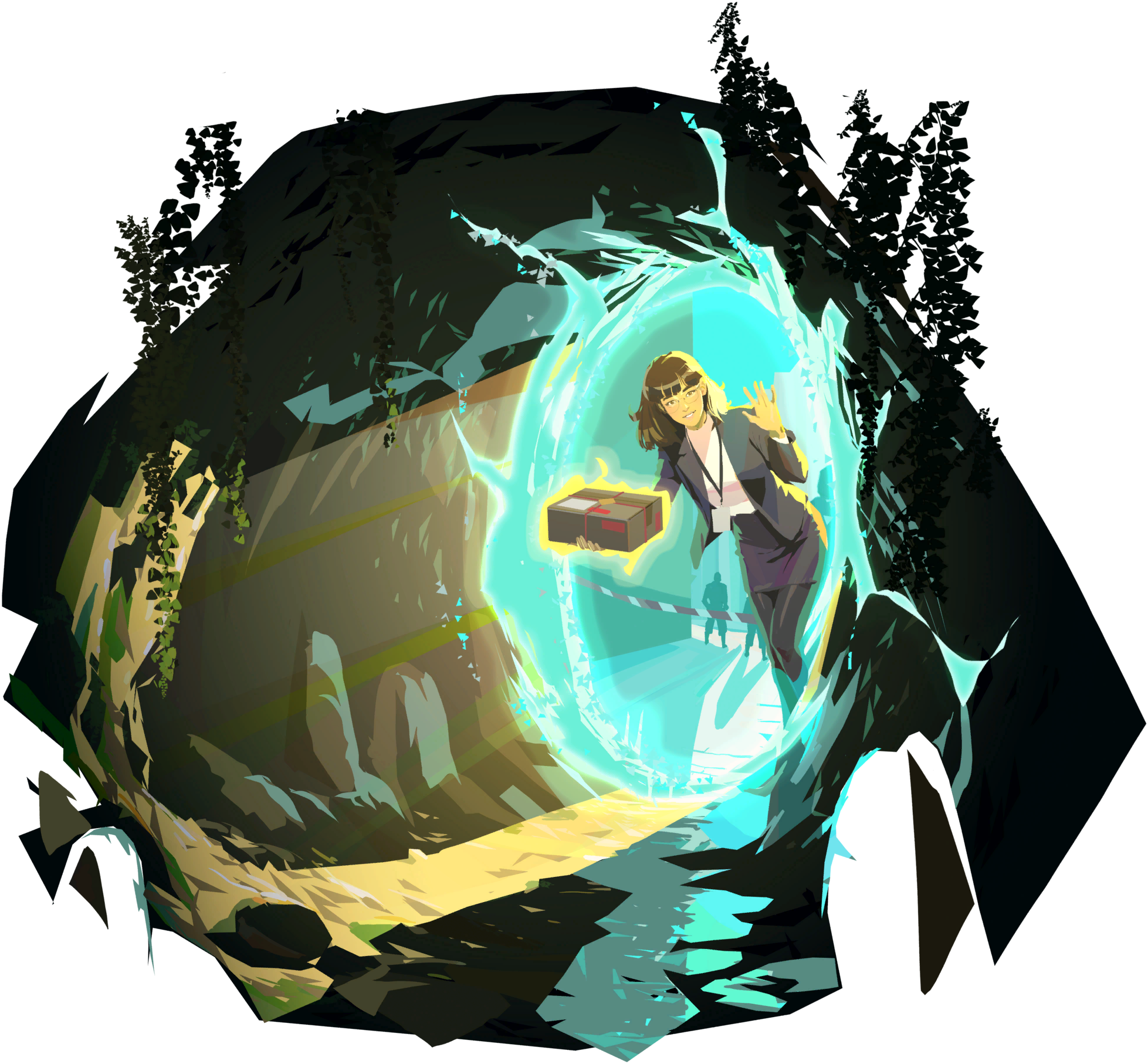 Starter Kit event before your first fight.
- Floors 4 and 10: host
 The Campfire and The Campfire, where you choose between Train (rank up a hero), Study (retrain a hero's upgrade), Recharge (restore Emergency Rewind at the first campfire), Rest (boost basic stats for the next combat), or Skip.
- Floor 5 (Mini-Boss): faces either Demon or Hydra.
- Floor 11 (Act Boss): pits your guild against one of three Dragons — Fire Dragon, Frost Dragon, or Poison Dragon.
After 50 seconds of combat, storm starts and hits all characters with increasing damage each second until combat ends. Visit the campfire and retrain guide to decide when to Train, Study, or Recharge.
Difficulties and run progression
Guildrun features 7 standard difficulty tiers in the difficulties overview, unlocking step by step as you clear each level, followed by the 6-challenge Red Rift contract mode. Reaching a Boss grants 2 Boss Tokens (up from 1 in Patch 0.5.2), which bundle your starting Hero choices with random starting bonuses at the start of a run and can also reroll all 3 bundles at once.
| Difficulty | Modifier | Stage tier |
|---|---|---|
| Base | No difficulty modifiers | Tier 1 |
 Difficulty: C | Heroes lose 10% Max HP at combat start | Tier 1 |
 Difficulty: B | Enemies gain extra durability | Tier 2 |
 Difficulty: A | 1 fewer Shard per surviving hero | Tier 2 |
 Difficulty: S | Heroes limited to 1 item per rank | Tier 2 |
 Difficulty: SS | Enemies deal increased damage | Tier 3 |
 Difficulty: SSS | Act Bosses apply Act Boss relics to act combats | Tier 3 |
Completing regular encounters grants 10 progression XP and finishing a stage or run grants 30 XP, gradually unlocking heroes like Tilly, Zuri, and  Niklas, item and relic bundles, and Boss Token slots. You can also face increasingly difficult battles in Endless Mode, or take on The Red Rift where any failed challenge results in defeat and resets your win streak.